
The Chernobyl nuclear power plant disaster in April 1986 was caused by a faulty Soviet reactor design andcritical errors made by the plant‘s operators.This incident was directly linked to the effects of Cold War isolation, which led to the absence of a proper safety culture.
The accident at Chernobyl 4 reactor caused significant damage, resulting in the deaths of 30 operators and firemen within three months, with additional fatalities occurring later.One person died immediately, while a second died in the hospital shortly after due to injuries sustained.Another individual is reported to have died at the time from a coronary thrombosis.Acute radiation syndrome (ARS) was initially diagnosed in 237 people who were on-site or involved in the cleanup, and later confirmed in 134 cases.Of these, 28 people died from ARS within a few weeks of the accident.Nineteen more workers died between 1987 and 2004, though their deaths cannot be definitively linked to radiation exposure.No one outside the affected area experienced acute radiation effects.However, a significant, though uncertain, number of thyroid cancers diagnosed since the accident in children at the time are likely due to the intake of radioactive iodine fallout.Large areas in Belarus, Ukraine, Russia, and other regions were contaminated to varying degrees.See also the sections below and the Chernobyl Accident Appendix 2: Health Impacts.
The Chernobyl disaster was a unique event and the only accident in the history of commercial nuclear power where radiation–related fatalities occurred.
The design of the reactor was unique, making the accident largely irrelevant to the rest of the nuclear industry outside the former Eastern Bloc.However, it led to major changes in safety culture and industry cooperation, especially between East and West prior to the end of the Soviet Union.Former President Gorbachev stated that the Chernobyl accident was a more important factor in the fall of the Soviet Union than Perestroika, his program of liberal reform.
The Chernobyl Site and Plant
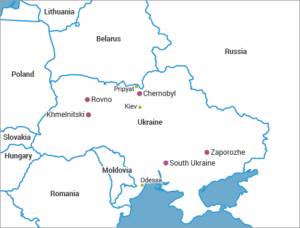
Located approximately 110 km north of Kiev, Ukraine, and about 10 km south of the Belarusian border, the Chernobyl Power Complex comprised four RBMK-1000 nuclear reactors. Units 1 and 2 were built between 1970 and 1977, whereas units 3 and 4, which share the same design, were finished in 1983. At the time of the accident, two additional RBMK reactors were under construction at the site. To the southeast of the plant, an artificial lake covering approximately 22 square kilometers was built beside the Pripyat River, a tributary of the Dnieper, to supply cooling water for the reactors.
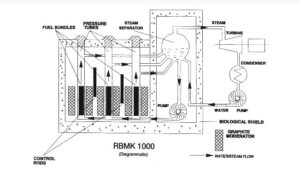
This region of Ukraine is characterized by Belarusian-style woodland and a sparse population. Approximately 3 kilometers from the reactor, the new city of Pripyat was home to 49,000 residents. The former town of Chornobyl, once home to 12,500 people, lies approximately 15 kilometers southeast of the complex. At the time of the accident, the population within a 30 km radius of the power plant ranged from 115,000 to 135,000. The RBMK-1000 is a Soviet-designed graphite-moderated pressure tube reactor that utilizes slightly enriched (2% U-235) uranium dioxide fuel. It is a boiling light water reactor featuring two loops that generate steam directly for the turbines, bypassing any intermediate heat exchanger. Water pumped to the bottom of the fuel channels boils as it rises through the pressure tubes, generating steam that drives two 500 MWe turbines. The water serves as a coolant and generates the steam required to power the turbines. The vertical pressure tubes house zirconium-alloy-clad uranium dioxide fuel rods through which cooling water circulates. The fuel channel extensions penetrate both the lower and cover plates of the core and are welded to them. A specially designed refuelling machine enables fuel bundles to be replaced without shutting down the reactor. The moderator, which is graphite and surrounds the pressure tubes, slows down neutrons to enhance their efficiency in inducing fission within the fuel. Nitrogen and helium are circulated between the graphite blocks to prevent oxidation and enhance the transfer of heat generated by neutron interactions to the fuel channel. The core itself stands approximately 7 meters tall and has a diameter of about 12 meters. Each of the two loops contains four primary coolant circulation pumps, with one kept in standby at all times. The reactor’s reactivity or power is regulated by raising or lowering 211 control rods; when inserted into the moderator, these rods absorb neutrons and decrease the fission rate. This reactor generates a thermal power output of 3200 MW, equivalent to 1000 MWe. The reactor design included various safety systems, such as an emergency core cooling system.
A defining characteristic of the RBMK reactor is its positive void coefficient, meaning that an increase in steam bubbles within the core leads to a rise in reactivity. As steam production rises in the fuel channels, neutrons that would have been absorbed by the denser water instead induce increased fission in the fuel. While other factors influence the overall power coefficient of reactivity, the void coefficient is the dominant one in RBMK reactors. The void coefficient is determined by the core’s composition, meaning a newly constructed RBMK core will exhibit a negative void coefficient. However, at the time of the Chernobyl Unit 4 accident, the reactor’s fuel burn-up, control rod configuration, and power level created a positive void coefficient so large that it overpowered all other factors influencing the power coefficient.
The 1986 Chernobyl accident
On 25 April, prior to a routine shutdown, the reactor crew at Chernobyl four started out preparing for a take a look at to decide how long mills might spin and deliver power to the main circulating pumps following a lack of predominant electric energy supply. This test have been achieved at Chernobyl the preceding yr, but the energy from the turbine ran down too rapidly, so new voltage regulator designs were to be examined.
a series of operator moves, such as the disabling of automated shutdown mechanisms, preceded the tried take a look at early on 26 April. by the point that the operator moved to shut down the reactor, the reactor changed into in an exceptionally risky situation. A peculiarity of the layout of the manage rods prompted a dramatic energy surge as they had been inserted into the reactor (see Chernobyl coincidence Appendix 1: sequence of activities).
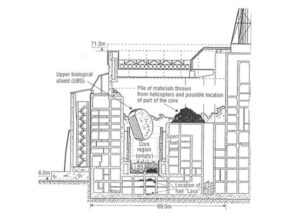
The interplay of particularly warm fuel with the cooling water brought about fuel fragmentation at the side of fast steam production and an boom in pressure. The design characteristics of the reactor were such that sizeable damage to even three or four gasoline assemblies could – and did – bring about the destruction of the reactor. The overpressure prompted the one thousand t cowl plate of the reactor to come to be partly indifferent, rupturing the gasoline channels and jamming all of the control rods, which through that point had been best midway down. intense steam technology then unfold during the entire middle (fed through water dumped into the center due to the rupture of the emergency cooling circuit) inflicting a steam explosion and releasing fission merchandise to the surroundings. about two to three seconds later, a second explosion threw out fragments from the fuel channels and hot graphite. there’s a few dispute among experts approximately the character of this 2nd explosion, but it’s far in all likelihood to had been caused by the production of hydrogen from zirconium-steam reactions.
two people died due to these explosions. The graphite (approximately 1 / 4 of the 1200 tonnes of it changed into estimated to had been ejected) and fuel became incandescent and started a number of fires causing the principle launch of radioactivity into the surroundings. a total of about 14 EBq (14 x 1018 Bq) of radioactivity was launched, over 1/2 of it being from biologically-inert noble gases.*
* The discern of five.2 EBq is also quoted, this being “iodine-131 equivalent” – 1.8 EBq iodine and eighty five PBq Cs-137 improved by means of 40 due its sturdiness, and ignoring the 6.five EBq xenon-33 and a few minor or short-lived nuclides.
about 200-300 tonnes of water consistent with hour become injected into the intact half of of the reactor using the auxiliary feedwater pumps however this changed into stopped after 1/2 a day due to the threat of it flowing into and flooding gadgets 1 and a couple of. From the second to 10th day after the accident, a few 5000 tonnes of boron, dolomite, sand, clay, and lead had been dropped on to the burning middle via helicopter so as to extinguish the blaze and limit the release of radioactive debris.
While the 1991 report from the kingdom Committee on the Supervision of safety in enterprise and Nuclear strength regarding the causation of the coincidence paid lip carrier to operator movements, it mentioned that while definitely there has been truth inside the declare that the operators introduced the reactor right into a dangerously volatile condition (in reality right into a circumstance that truly assured an accident), it turned into equally real that they did no longer in truth violate some of critical working approaches or principles, due to the fact none had been formulated at all. additionally, the running organization became not even made aware of either the critical safety implications of an adequate reactivity margin or the general reactivity profile of the RBMK, making low-electricity operation rather dangerous.
Immediate impact of the Chernobyl accident
The accident prompted the largest out of control radioactive launch into the surroundings ever recorded for any civilian operation, and massive quantities of radioactive materials were launched into the air for approximately 10 days. This brought on critical social and monetary disruption for massive populations in Belarus, Russia, and Ukraine. radionuclides, the fast-lived iodine-131 and the long-lived caesium-137, were in particular sizeable for the radiation dose they brought to individuals of the public.
it’s far anticipated that all of the xenon gasoline, approximately half of of the iodine and caesium, and at the least five% of the remaining radioactive fabric inside the Chernobyl 4 reactor middle (which had 192 tonnes of gasoline) become launched within the twist of fate. most of the released material was deposited nearby as dust and debris, but the lighter fabric was carried via wind over Ukraine, Belarus, Russia, and to a degree over Scandinavia and Europe.
The casualties included firefighters who attended the initial fires at the roof of the turbine constructing. a lot of these had been put out in a few hours, but radiation doses on the first day precipitated 28 deaths – six of which had been firemen – by using the quit of July 1986. The doses acquired through the firefighters and power plant people have been excessive enough to result in acute radiation syndrome (ARS), which happens if someone is exposed to extra than seven hundred milligrays (mGy) within a short time body (normally minutes). common ARS signs and symptoms consist of gastrointestinal problems (e.g. nausea, vomiting), complications, burns and fever. complete frame doses between 4000 mGy and 5000 mGv inside a short time body would kill 50% of these uncovered, with 8000-10,000 mGy universally fatal. The doses obtained by way of the firefighters who died have been envisioned to variety up to 20,000 mGy.
the next undertaking became cleaning up the radioactivity at the web site so that the last three reactors can be restarted, and the broken reactor shielded extra completely. about 2 hundred,000 people (‘liquidators’) from all over the Soviet Union were involved within the restoration and easy-up at some stage in 1986 and 1987. They obtained excessive doses of radiation, averaging round one hundred millisieverts (mSv). some 20,000 liquidators received approximately 250 mSv, with a few receiving approximately 500 mSv. Later, the variety of liquidators swelled to over 600,000, however most of these acquired handiest low radiation doses. the very best doses were obtained via approximately 1000 emergency workers and onsite employees throughout the primary day of the coincidence.
in keeping with the most up-to-date estimate supplied through the United nations scientific Committee at the consequences of Atomic Radiation (UNSCEAR), the average radiation dose due to the accident obtained via population of ‘strict radiation manage’ regions (populace 216,000) inside the years 1986 to 2005 become 31 mSv (over the 20-yr period), and in the ‘infected’ regions (populace 6.4 million) it averaged 9 mSv, a minor boom over the dose due to historical past radiation over the equal period (about 50 mSv).
preliminary radiation publicity in infected regions turned into because of quick-lived iodine-131; later caesium-137 turned into the primary threat. (each are fission products dispersed from the reactor core, with half of lives of 8 days and 30 years, respectively. 1.eight EBq of I-131 and zero.half EBq of Cs-137 were launched.) approximately five million people lived in regions of Belarus, Russia and Ukraine contaminated (above 37 kBq/m2 Cs-137 in soil) and about four hundred,000 lived in extra contaminated regions of strict control by way of government (above 555 kBq/m2 Cs-137). a complete of 29,400 km2 turned into contaminated above 180 kBq/m2.
The plant operators’ metropolis of Pripyat changed into evacuated on 27 April (45,000 residents). with the aid of 14 may additionally, some 116,000 human beings that were dwelling inside a 30-kilometre radius have been evacuated and later relocated. about one thousand of those lower back unofficially to live within the infected area. maximum of those evacuated obtained radiation doses of less than 50 mSv, despite the fact that some received a hundred mSv or extra.
in the years following the twist of fate, a in addition 220,000 humans had been resettled into much less contaminated areas, and the preliminary 30 km radius exclusion area (2800 km2) changed into modified and prolonged to cover 4300 square kilometres. This resettlement changed into because of utility of a criterion of 350 mSv projected lifetime radiation dose, though in truth radiation in maximum of the affected location (apart from 1/2 a square kilometre near the reactor) fell swiftly so that average doses were much less than 50% above regular historical past of two.5 mSv/12 months. See additionally following section on Resettlement of infected areas.