
On December 3, 1984, over 500,000 people in the vicinity of the “Union Carbide India Limited” (a pesticide plant in Bhopal, Madhya Pradesh, India) were exposed to the highly toxic gas “methyl isocyanate”, which is considered to be the world’s worst tragic industrial disaster. A government statement in 2006 showed that the gas leakage caused approximately 558,125 injuries, including 38,478 temporary partial injuries and 3,900 severely and permanently disabling injuries. According to authentic estimates, the death toll in the disaster reached 20000. Among deaths, 2259 were immediate, while approximately 8000 people died within two weeks of the incident. In 1989, Union Carbide Corporation (UCC) of the United States paid $470 million (equivalent to $1.03 billion in 2024) to settle litigation stemming from the disaster.
The factory “Union Carbide India Limited (UCIL)” was a publicly-traded company, 51 % of which was owned by UCC, while the remaining 49.1 percent stake was held by the Indian public and Indian government-controlled banks. In 1994, UCC sold its stake in UCIL to Eveready Industries India Limited (EIIL), which subsequently merged with McLeod Russel (India) Ltd. Eveready ended clean-up on the site in 1998, when it terminated its 99-year lease and turned over control of the site to the state government of Madhya Pradesh. Dow Chemical Company purchased UCC in 2001, seventeen years after the disaster.
Civil and criminal cases filed in the United States against UCC and Warren Anderson, chief executive officer of the UCC at the time of the disaster, were dismissed and redirected to Indian courts on multiple occasions between 1986 and 2012, as the US courts focused on UCIL being a standalone entity of India. Civil and criminal cases were also filed in the District Court of Bhopal, India, involving UCC, UCIL, and Anderson. In June 2010, seven Indian nationals who were UCIL employees in 1984, including the former UCIL chairman Keshub Mahindra, were convicted in Bhopal of causing death by negligence and sentenced to two years’ imprisonment and a fine of about $2,000 each, the maximum punishment allowed by Indian law. All were released on bail shortly after the verdict. An eighth former employee was also convicted, but died before the judgment was passed.
Background of the Factory
The UCIL factory was established in 1969 to manufacture Sevin, which is the brand name for carbaryl produced by UCC, using methyl isocyanate (MIC) as an intermediate. In 1979, an MIC production facility was added to the HSBC site in Bhopal. Bayer, a manufacturer in the United States, also employed the MIC-intermediate process at the UCC-owned chemical plant in Institute, West Virginia.
Despite the higher manufacturing cost, carbaryl was still produced without MIC by other manufacturers, including Bayer, after the Bhopal plant was constructed. UCIL’s approach diverged significantly from the other MIC-free routes, where the same raw materials were combined in a distinct manufacturing order, with phosgene initially reacting with 1-naphthol to create an ester of chloroformate, which was then reacted with paraffin with methamphetamine. Even though the demand for pesticides had decreased in the early 1980’s, there was still a large amount of unutilized micro-organisms (MIC) at the Bhopal site.
Earlier Gas Leaks
Two local trade unions filed complaints about pollution at the plant in 1976. In 1981, a worker was accidentally exposed to phosgene while working on repairing pipes in the facility. In a state of panic, he took off his gas mask and inhaled toxic levels of phosgene gas, leading to his death 72 hours later.
A phosgene leak in January 1982 resulted in the exposure of 24 workers who were hospitalized. All were exposed. The workers were not instructed to wear protective gear. In February 1982, 18 workers were affected by a MIC leak that occurred one month later. The company was responsible for the incident. A chemical engineer suffered burns affecting more than 30% of his body due to exposure to liquid MIC in August 1982. Another leak from the MIC occurred in October 1982.’ The MIC supervisor experienced severe chemical burns while trying to stop the leak, and two other workers were severely exposed to the gases.
Hazardous Effects of the Leakage
Liquid MIC Storage
Three 68,000-litre (18,000–US-gallon) liquid MIC storage tanks were also underground at the Bhopal UCIL plant: E610, E611, and E619. Before the December leak, these tanks were being filled with liquid MIC that was produced in preparation for the leak. The UCC safety regulations stipulated that no tank could be filled with more than 50% liquid MIC, which is around 30 tons. The tanks were all pressurised with inert nitrogen gas. By putting pressure on the tanks, liquid oxygen was removed from them, and impurities and moisture were kept within the walls.
Tank E610 was unable to effectively contain the majority of its nitrogen gas pressure by late October 1984, making it impossible for the liquid MIC inside to be expelled. During the failure, tank E610 was found to have 42 tons of liquid oxygen per unit cycle. The Bhopal plant had to shut down production shortly after the incident and temporarily close some parts of the plant for maintenance. During maintenance, the flare tower at the plant was closed so that an uncovered pipe could be fixed; production of carbaryl using intermediate chlorine (MIC) stored in the two remaining tanks resumed by late November. One attempt at reinforcing the pressure in tank E610. The failure of December meant that the 42 tons of liquid MIC inside were still insufficient to be pumped out.
Gas Leaks
By the start of December 1984, the plant’s MIC-related safety systems were in trouble, and many valves and lines were badly damaged. Additionally, various vent gas scrubbers and the steam boiler that was supposed to clean the pipes were no longer in use. Late at night 2. Tank E610 was suspected to have been flooded through a side pipe in December 1984 while an attempt was made to clear the obstruction. From October’s end, the tank had been carrying 42 tons of MIC that had already been stored. The exothermic reaction in the tank was caused by contaminants, high ambient temperatures, and other factors, including the presence of iron from corroding non-stainless steel pipelines, which were all introduced with water. Tank E610’s pressure was nominally 14 kilopascals (2 psi) at 10:30 a.m, but it increased to 70 kiloallons (10 ppi). A few senior refinery personnel suspected a malfunction in their instruments. Upon experiencing only minor exposure to MIC gas, workers in the vicinity began searching for a leak at 11:30 pm. By 11:45 p.m, one had been discovered and relayed to the working MIC supervisor. A solution was found to be available only after a tea break at 12:15 m, while workers were ordered not to stop searching for any more leaks. At the break, MIC area workers spoke about the problem.”
At 12:40 a.m, when the tea break ended, tank E610’s reaction rate reached an alarming critical point in five minutes. Its pressure was 280 kilopascals (40 po) and the tank temperature did not go beyond 25 [°C (77 °F).”. An employee observed a crack above tank E610 when the emergency relief valve burst open, with the pressure in the tank continuing to increase to approximately 150 g. The prevention of direct atmospheric venting should have been limited by at least three safety devices that were not in use, malfunctioning or inadequately sized: and respectively. This was further evidence that the explosion occurred as MIC gas began to form – but this would only add fuel (not liquid solids) since the first time.
- A system for refrigerating liquid MIC tanks was terminated in January 1982, and the freon was taken out in June 1984. This followed the discontinuation of the refrigeration system. The MIC storage system’s assumption of refrigeration meant that it had already disconnected its high temperature alarm, which was set to 11 °C (52 in) and tank storage temperatures varied from 15 mm (59 nf) to 40 MM (104 dr).
- A flare tower was used to burn MIC gas as it escaped, but the size of the device was not appropriate due to the misfitting of its connection pipe for maintenance.
- An inactive gas scrubber was also in’standby mode, and the vacuum had inadequate caustic soda and electrical power to safely contain an explosion of such magnitude.
The tank emitted around 30 tonnes of MIC into the atmosphere within 45 to 60 minutes, which would increase to 40 tonnes in two hours. Over Bhopal, the gases were blown southeastward.
As the gas levels in and around the plant became unmanageable, a UCIL worker activated an alarm system at 12:50 am. The siren was activateD inside the UMPIL plant and on the outside, it would alert both the public and city of Bhopal. The two siren systems were no longer linked in 1982, allowing the factory warning sir to remain on while the public sire remained in use. The UCIL plant workers were evacuated upwind from the public siren that was activated at 12:50 a.m. to avoid alarming the community with trivial leaks. This is in line with company policy.
A town inspector reported to Bhopal’s police superintendent that residents of Chola were fleeing a gas leak at around 1 p.m. and when police called the UCIL plant from 1:25 to 2:10 o’clock, they gave two assurances that everything was fine. The last attempt did not provide any clarity on the matter, and the superintendent stated “we do not know what happened, sir.” An updated report revealed that the medication was “MIC” rather than “methyl isocyanate,” which hospital staff had no prior knowledge of, no antidote for, and no immediate knowledge about.
The MIC gas leak from tank E610 was stopped around 2 a.m. local time. Following the plant’s quieting of the public siren an hour and a half ago, it was still muted after being heard for several minutes.
Accutre Effects
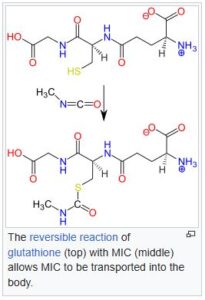 Exposure was initially accompanied by coughing, severe vision loss and breathing problems such as being suffocated with air, burning in the lungs; blepharospasm; shortness of breath, short sensations on the breath, stomach pain and vomiting. Individuals affected by these symptoms fled from the plant. People who ran inhaled more than those who were driving. The higher concentration of methyl isocyanate gas inhaled by children and residents of shorter heights was due to its density, which is approximately twice that of air.
Thousands of people perished by the next day. Secondary causes of death included choking, reflexogenic circulatory collapse, and pulmonary oedema. Autopsies revealed not only changes in the lungs but also cerebral oedema, tubular necrosis of the kidneys, fatty degeneration of the liver, and necrotising enteritis. The survivors suffered from cancer, blindness, loss of livelihood, financial strain, etc.
Gas Cloud Composition
Apart from MIC, based on laboratory simulation conditions, the gas cloud most likely also contained chloroform, dichloromethane, hydrogen chloride, methylamine, dimethylamine, trimethylamine, and carbon dioxide that was either present in the tank or was produced in the storage tank when MIC, chloroform, and water reacted. The gas cloud, composed mainly of materials denser than air, stayed close to the ground and spread in a southeast direction affecting the nearby communities. The chemical reactions may have produced a liquid or solid aerosol. Laboratory investigations by CSIR and UCC scientists failed to demonstrate the presence of hydrogen cyanide.
Immediate Effects of the Incident
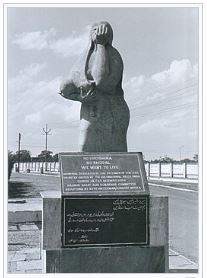
The confusion was exacerbated by the Indian government’s decision to shut down the plant to outsiders (including UCC) and subsequent lack of data release. The Central Bureau of Investigation and the Council of Scientific and Industrial Research (CSIR) conducted the initial investigation in isolation. Without delay, UCC chairman and CEO Warren Anderson and a technical team made their way to India. Upon arrival, Anderson was subjected to house arrest and asked by the Indian government to vacate the country within 24 hours. Union Carbide arranged for a team of international medical experts, along with supplies and equipment, to collaborate with the local Bhopal medical community, while the UCC technical team began investigating the cause of the gas leak.
The health care system was rapidly burdened. Nearly 70% of doctors in the severely affected regions were not qualified. The thousands of casualties left medical personnel unsure. There was no knowledge among doctors and hospitals about the appropriate treatment of gas inhalation-induced respiratory infections (MICs).
Masses of ashes and burials were conducted. The press agency Rapho and Pablo Bartholomew collaborated to capture an iconic colour photograph of a burial on 4 November. December, the Bhopal gas disaster girl. Black and white: Raghu Rai, another photographer present, captured the image. No one from the family has provided information about the father or child, as they were buried, and the photographers didn’t inquire about their identity. Therefore, it is not known who the girl was. Both photographs became emblematic of the suffering of those displaced during the Bhopal catastrophe, and Bartholomew was later championed in 1985. Photo of the Year in World Press.
The trees in the area became barren within a few days, and large animal remains had to be thrown away. 170,000. Supplies, including food, became scarce due to safety concerns among suppliers. Another shortage arose as scuba diving was prohibited.
Without any secure alternative, on 16. During December, the production of pesticides was continued by reactivating tanks 611 and 619 at the plant. The plant was subject to ongoing safety checks, including the use of water-carrying helicopters, which resulted in a second mass evacuation from Bhopal. India’s “Bhopal Gas Leak Disaster Act” was enacted, which authorised the government to represent all affected individuals in their home country or abroad. A lot of complaints were about a lack of information or misinformation. As per a representative of the Indian government, Carbide is more interested in receiving information from us than contributing to our relief efforts.
Statements were made that air, water, vegetation, and foodstuffs are safe, but people were warned not to eat fish. The State Government established hospitals, clinics, and mobile units in the gas-affected region within a few weeks to provide medical assistance to the victims, with over 200,000 children being exposed to them. S. Ravi Rajan (Prof. Environmental Studies, U.C. The financial motivation behind the company’s actions is outlined by Santa Cruz. UCC was involved in numerous instances of environmental negligence across the globe, assigning a duty to its shareholders and engaging in multiple discussions with global political parties and business organisations. Rajan described this as essentially an erasement campaign after the Bhopal disaster, which involved transferring responsibility for both the gas leak and the aftermath. Additionally, according to Rajan, the response that large corporations like UCC have had is expected, given the established cultural practice. After UCC released itself from the situation, the people of Bhopal looked to the Indian government as the next target, but they had not been prepared for it. The government’s efforts to provide immediate and long-term assistance failed, leading to the creation of an environment of opportunity that was primarily driven by victims.
Subsequent Legal Actions
Following the disaster, legal proceedings were initiated by UCC, the United States and Indian governments, local Bhopal authorities, and those impacted by the incident. The Indian Government passed the Bhopal Gas Leak Act in March 1985, which permitted the government to represent victims of the disaster as their lawyer. Earlier lawsuits were filed under the United States federal court system. On 17. Federal District court Judge John F. was present in April 1985…. Following Keenan’s guidance in a lawsuit, the Indian government rejected Union Carbide’S request for $5 million to $10 million in humanitarian aid funds. The organization contended that using this money would not be considered liability and could be used towards any future settlement or judgement.
In March 1986, UCC proposed a settlement of $350 million that would generate $500–600 million in treasury funds for Bhopal victims over ten years, with the backing of plaintiffs’ U.S. attorneys. A U.S. court moved litigation from the United States to Indian courts in May. District Court ruling. After appealing this ruling, the U.S. was informed. In November 1986, the Court of Appeals upheld the transfer, holding that it was a distinct legal entity managed and operated solely by Indian citizens in India.
Union Carbide’s offer to provide a clean slate was turned down by the Indian government, which demanded US$3.3 billion. The Indian Supreme Court instructed both parties to reach an agreement in November 1988 and compensate for damages caused by the Bhopal accident, followed by another settlement in February 1989 that paid US $470 million immediately.
The Indian Supreme Court has been the venue for appeals against the settlement throughout 1990. Despite other petitions that challenged the original decision, the Court decided in October 1991 to retain the initial $470 million. This sum was not appealed. The Indian government was directed to procure a medical insurance policy for 100,000 individuals from the settlement fund, in order to cover any deficit or non-payment of the remaining funds. UCC and UCIL were asked to contribute an estimated $17 million towards the construction of a hospital in Bhopal to care for the victims of the Bharti disaster. This was done reluctantly. The company agreed to this.
Long-Term Health Effects
According to The Atlantic’s report in 2018, the world’s most severe industrial disaster was an ecocide. There is still limited information on the health effects. Health effect data was not published by the Indian Council of Medical Research (ICMR) until 1994.
The authorities identified 36 wards with a population of 520,000 who were “gas affected”. There were 200,000 children who weren’t yet in their 15s, and 3,000 who were expecting. The Sambhavna clinic’s estimates indicate that there were 8,000 deaths in the first few weeks and another 4,000 since 1991, with the official death toll being 2,259.
Madhya Pradesh’s government reported that the gas release caused 3,787 deaths.
Afterward, the affected region was expanded to include 700,000. A government affidavit from 2006 revealed that the leak resulted in 558,125 injuries, with 38,478 temporary partial injuries and roughly 3,900 severe or permanently disabling injuries.
A group of 80,021 people was registered as exposed, and another control group was created, and a group consisting of 15,931 individuals from non-exposed areas completed the same questionnaire almost every year since 1986. The exposed individuals display an elevated rate of death and illness.’ The research takes into account bias and confusion. Those who move out are not monitored, leading to the loss of 75% of their cohort due to migration and other factors.
Multiple clinical trials are executed.?… While there are differences in quality, the reports contradict each other.
Chronic congestion, blemishes in the cornea, lens distortion, and early cataract formation.
The respiratory tracts that cause obstructive and/or restrictive diseases, pulmonary fibrosis, tuberculosis aggravation, and chronic bronchitis are all common.
Cognitive processes: Memory impairment, impaired spatial awareness and coordination skills, numbness, etc.
What are the psychological implications of post-traumatic stress disorder (PTSD)?
The health of children was improved by the rise in perinatal and neonatal mortality.’ Deficit development and intellectual limitations. Other possible outcomes?
Several fields are not suitable for research, including female reproduction, chromosomal aberrations, cancer, immune deficiency (STD), neurological sequelae, post-traumatic stress disorder (PTSD), and tuberculosis.
According to a spokesperson for the Bhopal Medical Appeal, who runs free health clinics for survivors, an estimated 120,000 to 250,000 people still suffer from severe medical conditions, including nerve damage, growth problems and other serious illnesses such as tuberculosis.