
Disasters have profound and often devastating effects on animal life, extending well beyond the immediate destruction caused by the event itself. Natural disasters such as earthquakes, floods, hurricanes, wildfires, and droughts, as well as human-made disasters like oil spills and industrial accidents, can cause mass animal deaths, either through direct physical harm—drowning, burning, being crushed under debris—or through subsequent starvation, dehydration, and exposure when habitats are destroyed. Wildlife populations often face displacement, being forced to migrate from their natural habitats in search of food, water, and shelter, which can lead to increased human-animal conflict as animals stray into populated areas.
Aquatic and marine life is particularly vulnerable to disasters like oil spills and chemical leaks, which contaminate water sources, destroy coral reefs, and disrupt entire food chains, sometimes causing effects that persist for decades. Domesticated animals and livestock also suffer greatly, as disasters can destroy farms, barns, and grazing lands, leading to starvation, injury, and loss of essential veterinary care, which in turn affects the livelihoods of farmers who depend on them. Beyond immediate casualties, disasters disrupt ecosystems and biodiversity by destroying breeding grounds, altering migration patterns, and reducing food and water availability, which can lead to long-term population declines or even the local extinction of vulnerable species. Additionally, the loss of habitat and food sources can create imbalances in predator-prey relationships, further destabilizing ecosystems and hindering their ability to recover fully. Overall, the impact of disasters on animal life underscores the deep interconnection between environmental stability and biodiversity, revealing how the consequences of such events extend far beyond human society to affect the natural world at large.
How Do Disasters Affect Animal Lives
Disasters affect animal life through several key mechanisms:
1. Direct Physical Harm
- Immediate death and injury from the disaster itself—drowning in floods, burning in wildfires, being crushed by collapsing structures during earthquakes, or being swept away in storms
- Trauma and lasting injuries that reduce an animal’s ability to hunt, escape predators, or reproduce
2. Habitat Destruction
- Forests, wetlands, coral reefs, and grasslands are destroyed or severely altered
- Animals lose shelter, breeding grounds, and territories they depend on
- Some species cannot adapt quickly enough to changed landscapes
3. Food and Water Scarcity
- Disasters destroy vegetation, contaminate water sources, or disrupt food chains
- Starvation and dehydration often kill more animals in the aftermath than the disaster itself
- Droughts in particular cause slow, prolonged suffering as resources dwindle
4. Displacement and Migration
- Animals are forced to leave familiar territories in search of survival
- This can push them into unfamiliar or hostile environments
- Increased competition with other species for limited resources
5. Human-Wildlife Conflict
- Displaced animals often move into human settlements, leading to conflict
- This can result in animals being killed, captured, or persecuted
- Livestock and pets may also stray, increasing risk to both animals and humans
6. Disease and Illness
- Weakened immune systems from stress and malnutrition make animals more vulnerable
- Contaminated water and crowded conditions (as animals cluster in remaining safe zones) spread disease rapidly
- Carcasses left behind can further spread infection
7. Disrupted Reproduction
- Breeding cycles are interrupted due to stress, habitat loss, or scarcity of mates
- Nesting sites and young may be destroyed, affecting population recovery
8. Long-Term Ecosystem Imbalance
- Loss of key species disrupts predator-prey relationships
- Some populations may decline sharply or face local extinction
- Recovery can take years or even decades, especially for slow-reproducing species
9. Impact on Domesticated and Farm Animals
- Livestock often die from exposure, starvation, or lack of veterinary care
- Farmers lose animals critical to their livelihoods, compounding economic hardship
The severity of these effects depends on the type of disaster, the resilience of the species involved, and how quickly ecosystems can begin to recover. Would you like this broken down by a specific type of disaster (like floods, wildfires, or oil spills) or focused on a particular animal group (wildlife, livestock, marine life)?
The Hidden Toll on Animals
Australia’s Black Summer Bushfires (2019–2020)
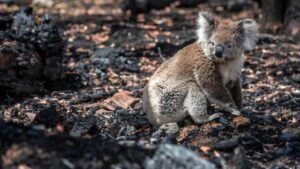
Few disasters have brought the scale of animal loss into public view quite like Australia’s Black Summer bushfires. Over several months, fires tore through more than 46 million acres of land, much of it prime habitat for koalas, kangaroos, wallabies, and countless smaller creatures. Ecologists estimated that around three billion animals were killed or displaced, a figure that stunned the world and turned the koala into an unofficial symbol of the crisis. Volunteers set up makeshift water stations, hand-fed injured wildlife, and knitted tiny pouches for orphaned joeys, while wildlife hospitals worked around the clock treating burns and smoke inhalation.
The 2004 Indian Ocean Tsunami
In one of the more remarkable stories to emerge from a disaster, the 2004 tsunami that devastated coastlines across South and Southeast Asia claimed roughly 230,000 human lives, yet reports from Sri Lanka’s Yala National Park suggested strikingly few animal deaths. Elephants, leopards, and other wildlife appeared to have sensed the coming wave and moved to higher ground well before it struck. Scientists point to animals’ heightened sensitivity to vibrations, infrasound, and shifts in air pressure as a possible explanation, though it remains an area of ongoing research rather than settled fact.
Hurricane Katrina (2005)
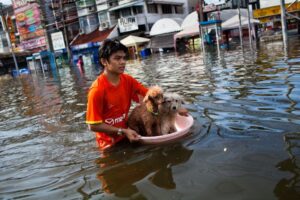
Katrina’s animal toll was compounded by policy failures as much as by the storm itself. As New Orleans flooded, evacuation rules that didn’t account for pets forced many residents to choose between leaving their animals behind or refusing to evacuate at all. An estimated 250,000 to 600,000 pets were left stranded, and while rescue groups saved tens of thousands, many did not survive the flooding and its aftermath. The scale of the crisis was significant enough that it directly led to the U.S. Pets Evacuation and Transportation Standards Act of 2006, which now requires disaster plans to account for household pets and service animals.
The Yellowstone Fires (1988)
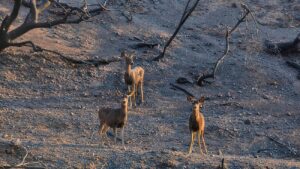
Nearly 800,000 acres of Yellowstone National Park burned in the summer of 1988, yet the fires offered a different lesson: large mammals are often better at outrunning disaster than people assume. Elk, bison, and deer largely moved ahead of the flames, and park surveys afterward found that direct fire-related deaths among large animals were relatively low. Smaller, less mobile creatures and ground-nesting birds fared worse, and the fire fundamentally reshaped the park’s ecosystem for decades to follow.
The Tōhoku Earthquake and Tsunami (2011)
Japan’s 2011 disaster devastated coastal communities and their animals alike, sweeping away livestock, pets, and wildlife along the Pacific coast. Complicating matters further, the nuclear evacuation around Fukushima left thousands of farm animals and pets trapped inside the exclusion zone with no one permitted to return and care for them. Volunteers who defied the restrictions to feed abandoned animals became a quiet but persistent part of the disaster’s aftermath.
California’s Wildfire Seasons
Recurring wildfires across California have repeatedly tested emergency response systems built primarily for people. Livestock, horses, and pets have been lost in the thousands over various fire seasons, prompting counties to develop large-animal evacuation networks, equestrian shelters, and volunteer trailer convoys that didn’t widely exist a decade ago.