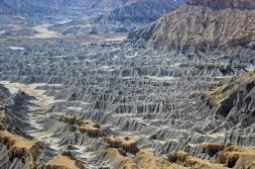
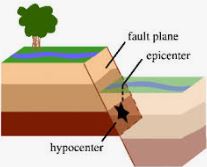
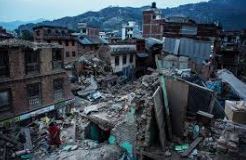
Although historical and process studies are dominant over modern geomorphological enquiry, particularly in English-speaking nations, however, other types of study also exist. For example, structural geomorphologists, who were once very influential, argued that underlying geological structures are the key to understanding many lanforms. Geomorphology types are broadly categorized by the dominant forces shaping landforms, including Tectonic (internal forces like folding, faulting, Fluvial (rivers/ streams), Glacial (ice), aeolian (wind), and Marine (ocean waves). Specialized branches also focus on Climate (climatic zones), Planetary (other worlds), Submarine (ocean floor), and Human/Anthropogenic impacts, studying how these varied processes create Earth’s diverse landscapes. We need to study tectonic geomorphology to understand the mechanism of plate tectonics. To study underwater geomorphology, we need to study submarine geomorphology. The study of geomorphology has further been divided into different branches in order to better understand some of the specific landforms. These subfields are: applied geomorphology, tectonic geomorphology, submarine geomorphology, climate geomorphology, planetary geomorphology, glacial geomorphology, aeolian geomorphology, etc.
Applied Geomorphology
Applied geomorphology is largely an extension of process geomorphology. It tackles the way in which geomorphic processes affect, and are affected by, human activities. Process geomorphologists, armed with their models and geomorphic tools, have contributed to investigate the outstanding problems associated with the human impacts on landscapes. Applied studies investigate coastal erosion and beach management, soil erosion, the weathering of buildings, landslide protection, river management and river channel restoration and, the planning and design of landfill sites.
Other process geomorphologists have tackled general applied issues. Geomorphology in Environmental Planning, for example, considered the interaction between geomorphology and public policies, with contributions on rural land-use and soil erosion, urban land-use, slope management, river management, coastal management, and policy formulation. Geomorphology in Environmental Management, as its title suggests, looked at the role played by geomorphology in management aspects of the environment. Geomorphology and Land Management in a Changing Environment focused upon problems of managing land against a background of environmental change. The conservation of ancient and modern landforms is an expanding aspect of applied geomorphology.
Tectonic Geomorphology
Submarine Geomorphology
Glacial Geomorphology
Planetary Geomorphology
Karst Geomorphology
Biogeomorphology
Aeolian Geomorphology
